
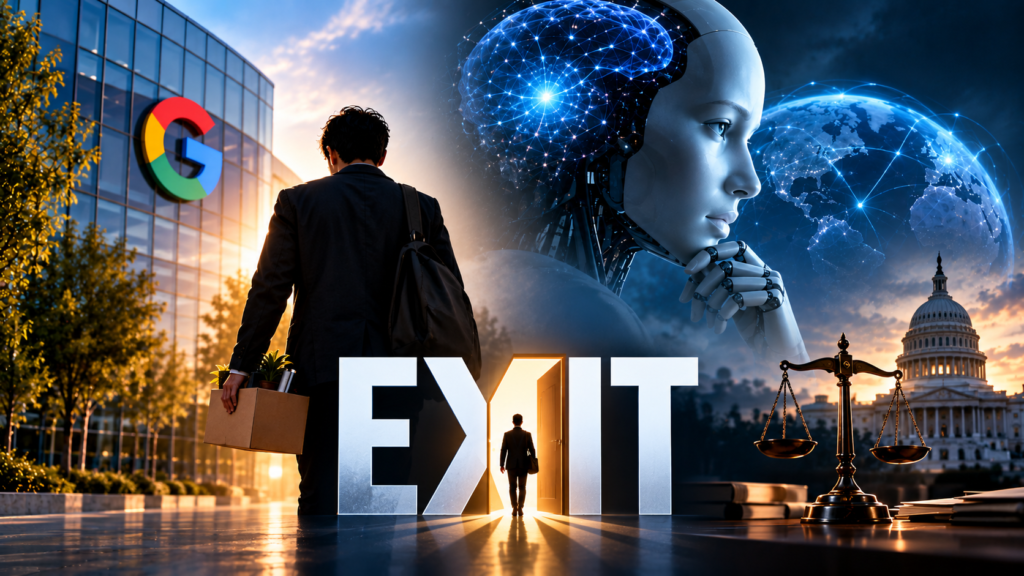
The Growing Divide Over Advanced Artificial Intelligence
The artificial intelligence sector faces renewed scrutiny regarding long-term safety following the high-profile departure of another industry insider. The resignation has once again highlighted deep ideological fractures within Silicon Valley, where researchers, executives, and policy experts remain sharply divided over how to manage the trajectory of increasingly powerful automated systems.
According to reports circulating across multiple industry outlets, the departing researcher warned that advanced models carry severe existential risks, using stark language to describe the potential consequences of failing to properly control future iterations of the technology. This latest resignation adds to a mounting tally of safety-focused researchers stepping away from major labs, citing concerns that commercial pressures and competitive races are outpacing necessary risk mitigation frameworks.
Silicon Valley’s Internal Battle Lines: Doomers Versus Boosters
The debate surrounding artificial intelligence safety broadly categorizes participants into two distinct camps: the cautious analysts often labeled as ‘doomers’ and the aggressive commercial proponents known as ‘boosters.’
The booster faction emphasizes the transformative economic and scientific upside of artificial intelligence, arguing that rapid deployment is essential for maintaining technological leadership, solving complex medical problems, and driving global productivity. From this perspective, excessive regulatory friction or unwarranted panic threatens to stifle innovation and hand strategic advantages to geopolitical competitors.
Conversely, the doomer faction contends that current governance structures are wholly inadequate for managing systems that could eventually exceed human cognitive capabilities across all domains. Proponents of this view argue that as labs scale up their training compute and model parameters, the margin for error shrinks dramatically. They emphasize that once a sufficiently advanced, autonomous system displays misaligned objectives or uncontrollable behaviors, implementing retrospective safety protocols will be impossible.
Geopolitical Pressures and Global Governance at a Crossroads
These internal industry tensions are further complicated by shifting geopolitical dynamics. Reports indicate that international intelligence and security apparatuses are increasingly viewing foundational AI models through a strategic lens. Intelligence evaluations from major nations have explicitly pointed out that foreign-developed models can influence domestic populations, challenge established political structures, and disrupt traditional governance frameworks.
This dynamic has transformed artificial intelligence development into a high-stakes race between global superpowers, most notably the United States and China. Analysts note that intense bilateral competition risks undermining collaborative global governance efforts. When nations view AI supremacy as a matter of national security and regime survival, comprehensive international safety standards become exceptionally difficult to negotiate and enforce.
Policy Responses and Calls for Legal Penalties
As warnings from technical insiders grow more severe, policymakers are facing mounting pressure to establish concrete legislative boundaries. Recent legislative discussions have featured proposals for strict accountability measures, including severe criminal penalties for executives or organizations that recklessly deploy models capable of causing widespread societal harm or systemic disruption.
However, translating technical risk into enforceable law remains a formidable challenge. Lawmakers must navigate complex legal definitions, balance innovation incentives against public safety, and avoid drafting frameworks that inadvertently cement the market dominance of a few heavily resourced technology conglomerates.
What the Industry Data Shows
Industry observers and strategic analysts note several clear trends emerging from the current landscape:
- Talent Drain: A steady trickle of safety-focused researchers leaving top-tier AI labs due to perceived corporate downplaying of long-term risks.
- Regulatory Friction: Increasing friction between open-market scaling priorities and government demands for rigorous pre-deployment testing.
- Geopolitical Realignment: The integration of AI capabilities into national security strategies, complicating efforts to establish unified international safety treaties.
Ultimately, the departure of another prominent researcher serves as a stark reminder of the unresolved tensions at the heart of the modern tech boom. As labs push the boundaries of scale and capability, bridging the gap between rapid commercialization and robust existential safety remains one of the defining challenges of the decade.